ServicesGutters
Gutters in Edgewood, Sized and Pitched for Your Roof
Gutters have one quiet job: carry roof water away from your fascia, siding and foundation. We install one-piece gutters and downspouts sized to the water your roof actually sheds, and we explain each choice so you know exactly what you are paying for.
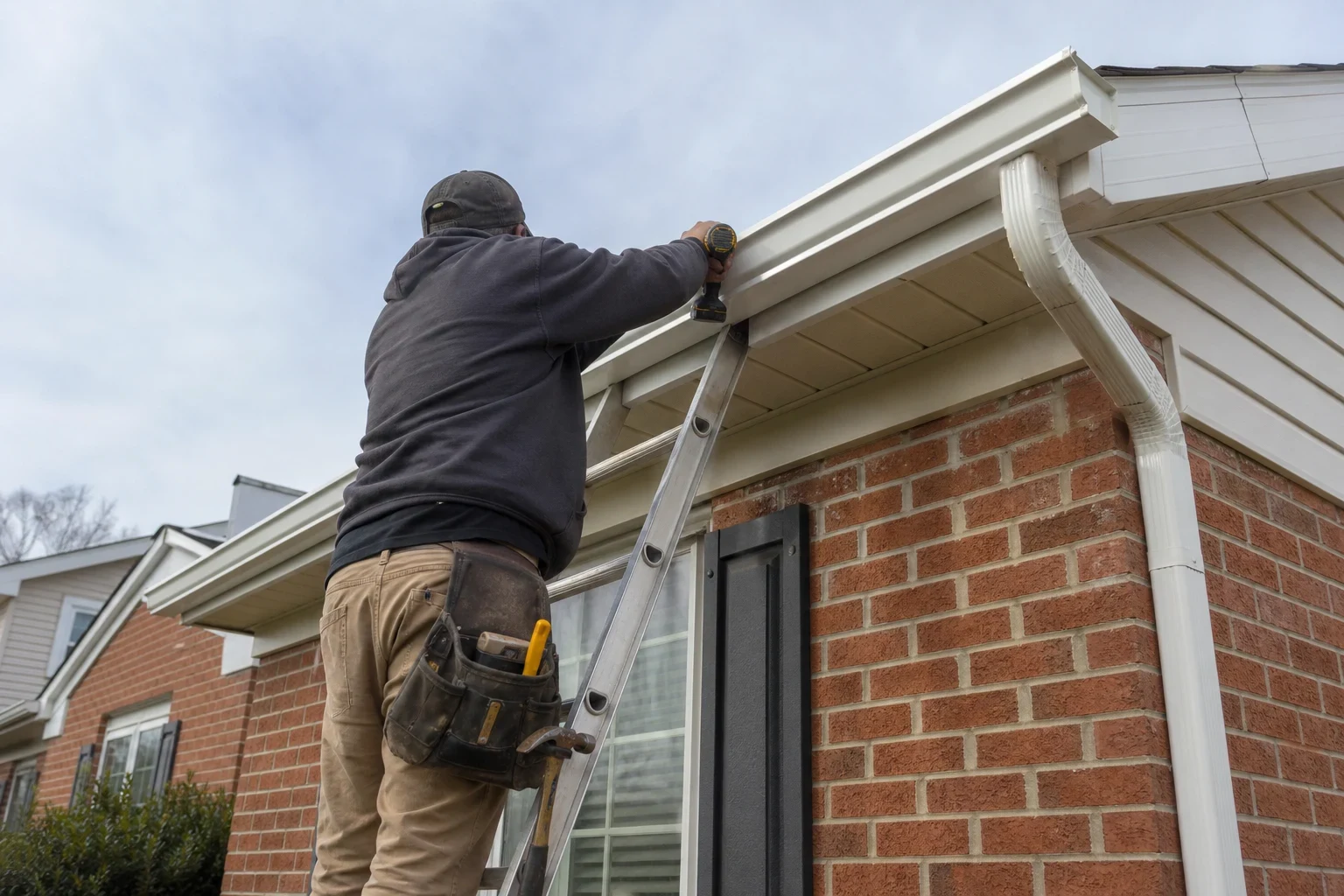
What a Gutter System Is Really For
Your roof gathers far more water than most people expect. A single steady rain can push hundreds of gallons off a typical roof, and the gutters decide where all of it lands. Working well, they go unnoticed. Once they sag, clog or slope the wrong way, water slips behind the fascia, streaks the siding and settles next to the foundation.
Replacement is the right call when the old gutters leak at their joints, lean away from the house or are too small for the roof above them. A repair is enough when the run is straight and solid and only one section, hanger or outlet has given out. We tell you which situation you are in, and we show you why.
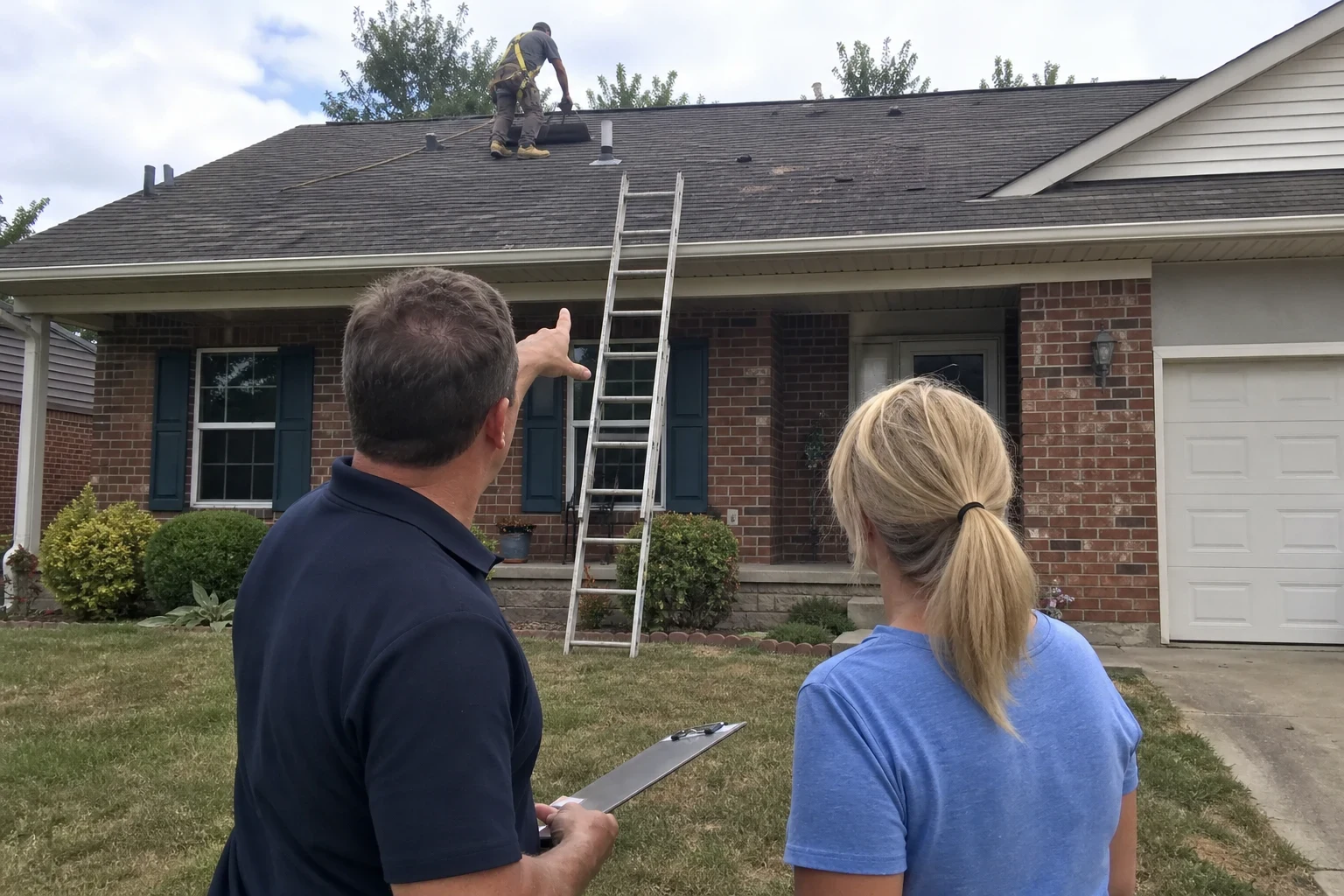
What Our Gutter Work Includes
- 01
One-piece aluminum runs
Each gutter is formed on site from a continuous coil, cut to match the roof edge it serves. Joints appear only where the run turns a corner, which leaves far fewer spots for a drip to begin.
- 02
Correct size for your roof
Most homes do well with 5-inch K-style gutters. Steep roofs or large unbroken slopes often need 6-inch gutters and larger 3x4 downspouts to keep up in a heavy storm.
- 03
Hidden hangers and proper pitch
We fasten gutters with concealed hangers screwed into the fascia rather than spikes that loosen over time. Each run gets a gentle slope toward the outlet, roughly a quarter inch every ten feet, so water does not sit.
- 04
Fascia and drip edge check
Before anything goes up, we look at the fascia board the gutter will hang on. Soft or rotted wood is pointed out and replaced. We also confirm the metal drip edge at the shingle line laps over the gutter, so runoff drops inside the trough instead of running down the back of the board.
- 05
Downspouts that end somewhere useful
Downspouts are placed where they drain away from the foundation, walkways and driveway, with extensions or splash blocks so water lands several feet from the house.
- 06
Gutter guards, if they fit
We explain the difference between basic screens, micro-mesh and reverse-curve guards, and which one suits the trees around your home. If guards will not help much, we say so.
Questions about Gutters?
Call(859) 295-3604Signs Your Gutters Need Attention
Water spilling over the front
Overflow in a steady rain usually points to a clog, a pitch that has gone flat, or gutters too small for the roof.
Sagging sections
A run that dips between its supports holds a pool of standing water, and that extra weight grows with each storm. Spikes backing out of the fascia are usually the earliest clue.
Drips at joints and corners
Older sectional gutters fail where the pieces meet. Rust lines or dark streaks under a joint show where water has been escaping.
Stained siding or peeling paint
Streaks on the siding below the gutter, or paint lifting on the fascia, mean water is getting behind the system instead of through it.
Ice that builds along the edge
Northern Kentucky winters bring repeated freeze and thaw. Gutters that hold water freeze solid, and the weight bends hangers and pushes ice under the shingles.
Puddles or washouts near the foundation
Soil eroding under a downspout, or a damp corner in the basement, often traces back to water that was never carried far enough from the house.
From First Visit to Final Rinse
- 1
Measuring every roof edge
We circle the house, measure each run and look closely at the fascia. We also note which roof sections send the heaviest flow. You hear what we found in plain terms, with photos of anything out of sight from the ground.
- 2
Your options, side by side
We lay out gutter size, downspout placement and guard choices, with what each one does and does not do. Your estimate lists each item separately.
- 3
Removal and fascia repair
Old gutters come down carefully, nails and fasteners are collected, and any damaged fascia is replaced before new gutters go on.
- 4
Forming and hanging
The new runs are formed on site, hung on concealed hangers, pitched toward the outlets and sealed at the corners. Most homes are finished in a single day.
- 5
Flow check and tidy yard
Before we pack up, we pour water into each run and watch it travel to the downspouts and out past the foundation. Then scrap, old fasteners and debris are cleared so the yard looks the way you left it.
What Shapes the Cost of New Gutters
Two things drive most gutter pricing: how much material goes up, and how much effort it takes to reach the roof edge safely. Every part gets its own line on your estimate, so nothing is bundled out of view.
- Total length and corner count
- Every added foot of gutter adds material. Each miter where the house changes direction is another joint we form, seal and finish by hand.
- Height and access
- A two-story home, a steep slope below the eave or landscaping tight to the house all add setup time and care.
- Gutter size and guards
- Moving from 5-inch to 6-inch gutters, or adding micro-mesh guards, changes the material cost. We show you both so you can decide.
- Condition of the fascia
- Sound wood adds nothing. Rotted boards spotted during our visit are listed and priced before work begins, not discovered halfway through.
Common Gutter Questions, Answered
How do I know what size gutters my house needs?
Size follows the area and steepness of the roof that empties into each run. Plenty of homes are well served by 5-inch gutters, though a long, steep slope can overrun them in a hard rain. We measure each side and tell you what it needs.
Are gutter guards worth it?
They help most when tall trees drop leaves, seeds or needles onto the roof. Micro-mesh keeps out fine debris that basic screens let through. Guards reduce cleaning but do not eliminate it, and we will explain the tradeoff honestly.
My gutters only leak in one spot. Do they all have to go?
Usually not. When the run still holds its line and the metal is sound, resealing a corner, adding a hanger or swapping one damaged length is a sensible fix. If joints are giving out along the whole system, new gutters tend to cost less over time than chasing one leak after another.
Should I replace gutters at the same time as my roof?
It is a good moment to do it, because the drip edge and fascia are exposed and easy to correct. If your gutters are in good shape, they can usually be removed and rehung. We cover this during a roof replacement estimate.
Will you damage my landscaping?
We set ladders carefully, keep scrap off beds and lawns, and clean up fully before we leave. If shrubs sit tight against the house, we talk through how we will work around them before the day starts.
Find Out What Your Gutters Need
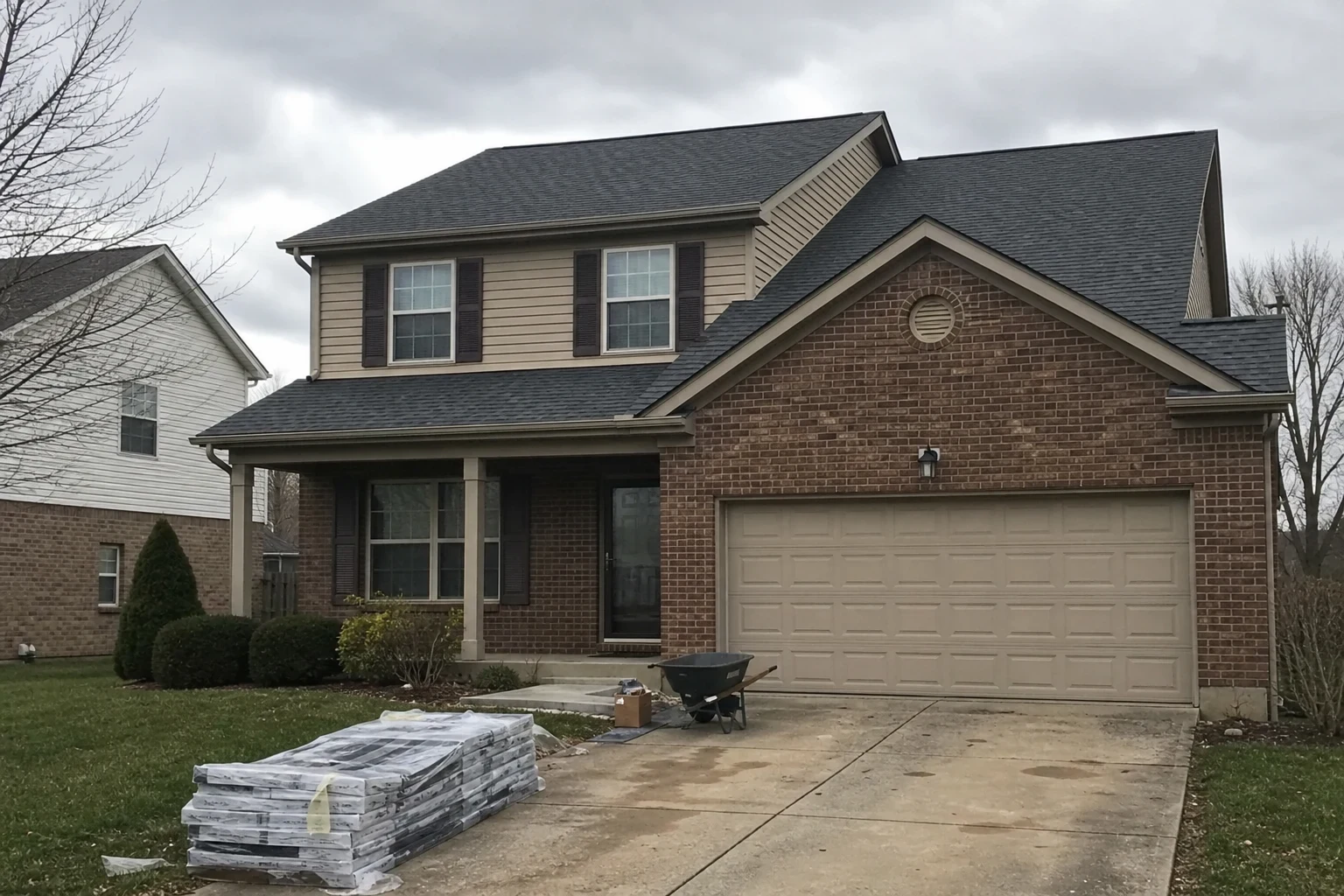
We will look at your gutters, fascia and downspouts, explain what we see in plain terms and give you a line-by-line estimate. We work across Edgewood and nearby towns like Crestview Hills and Fort Mitchell, and right now first-time customers can use this offer: Limited Time — $50 Off Your First Service Call.