ServicesRoof Inspections
Roof Inspections in Edgewood, Shown to You Part by Part
A useful roof inspection leaves you knowing more than pass or fail. We check the roof and, when we can reach it, the attic underneath. Then we sit down with you and go through the shingles, flashing, vents and gutters one at a time, with photos and everyday words.
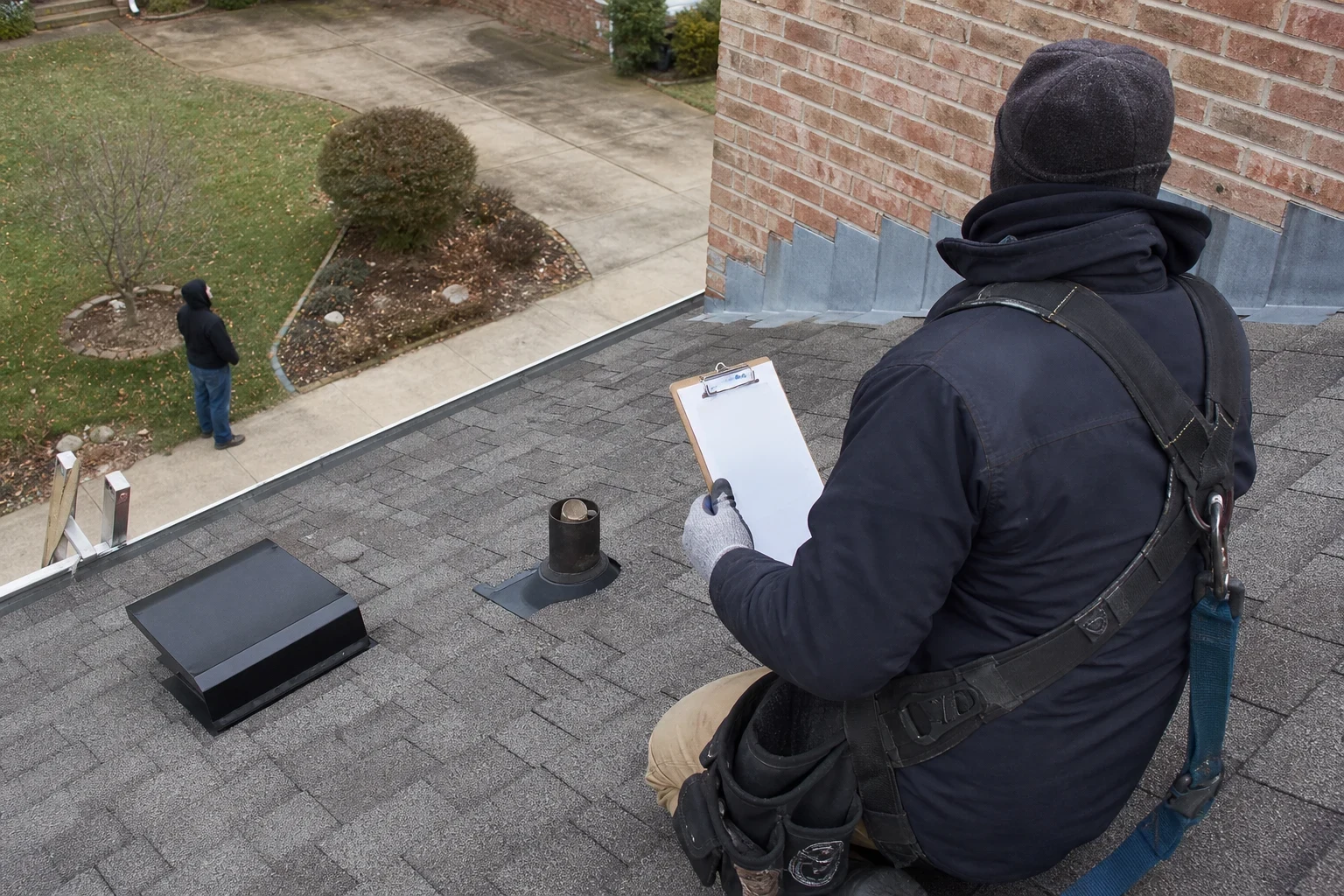
What an Inspection Tells You
Roofs rarely fail all at once. Granules wash off a shingle, the rubber seal around a vent pipe hardens and splits, a piece of chimney flashing lifts a little more each winter. You can't see any of that from the driveway. A ceiling stain is usually the last sign rather than the first, and by the time it appears, moisture has often been reaching the decking for months.
An inspection catches those changes while you still have choices. We look at each part of the roof system and tell you what it does and how worn it is. Every finding then gets a simple label. Some items should be fixed soon, some are worth watching over the next year or so, and some are just the normal wear you'd expect on a roof of that age.
If your roof needs nothing, we say so. If it needs roof repair or a full roof replacement, we show you why, in terms you could repeat to anyone else you ask for a second opinion.
What We Check on Your Roof
Shingle surface and wear
We look for bare spots where granules have washed off, curling or cupped edges, cracks and missing tabs. Granule loss matters because those tiny stones are what shield the asphalt from sun.
Flashing at chimneys, walls and valleys
Metal flashing seals the joints where the roof meets something else. We check that it lies flat, that the sealant is intact and that nothing has pulled loose. Most leaks we trace start here.
Vents, pipe boots and other openings
Rubber boots around plumbing vents tend to crack years before the shingles wear out. We check every boot, vent and fan housing for gaps.
Decking and roof line
Soft spots underfoot or a dip along the ridge can point to wet or weakened decking. We note where and how much.
Attic moisture and ventilation
When the attic is reachable, we look for water stains, damp or matted insulation, frost on nail tips and daylight showing through where it shouldn't. Trapped heat and moisture age shingles from below, and in a Kentucky winter that warmth melts snow that refreezes at the eaves as ice dams.
Gutters and drip edge
We check that water leaves the roof and moves away from your home, and that the drip edge is directing runoff into the gutters rather than behind them.
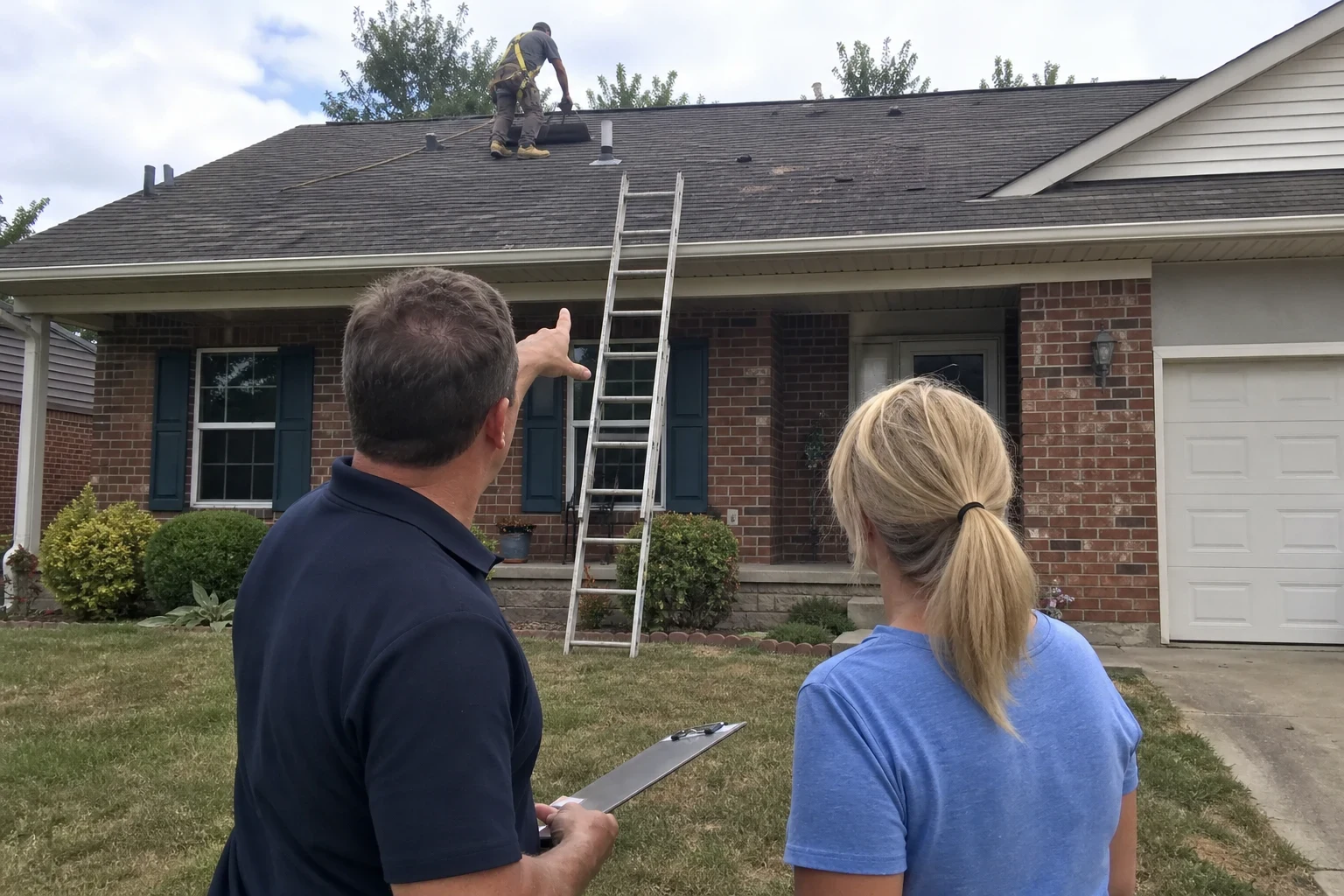
Signs It's Time for a Roof Inspection
- Your roof is past fifteen years
- Asphalt shingles commonly begin to wear noticeably somewhere past the fifteen-year mark. A look now tells you roughly how many good years remain, so a new roof becomes something you budget for rather than a surprise.
- A strong storm just passed
- High wind and hail can lift or bruise shingles without leaving obvious debris. If we find damage, our storm damage repair page covers what comes next.
- Ice dams formed last winter
- Thick ice along the eaves usually means heat is escaping into the attic. Northern Kentucky's freeze and thaw cycles let that meltwater work under shingles, so it is worth a look before the next cold season.
- Granules collecting in the gutters
- A little is normal on a new roof. Steady piles of dark grit on an older one mean the shingles are wearing thin.
- A stain on a ceiling or wall
- Water often travels along rafters before it drips, so the stain rarely sits under the leak. We trace it back to where it actually enters.
- You're buying or selling a house
- Knowing the roof's condition up front keeps surprises out of negotiations on both sides.
How Your Inspection Day Goes
- 1
A short phone conversation
We ask about your roof's age, any leaks or storms you know of, and a time that suits you. That tells us what to look at most closely.
- 2
On the roof
We work across the roof section by section, photographing anything worth noting. On a roof too steep or fragile to walk safely, we inspect from the ladder and the edges instead and tell you so.
- 3
Under the roof deck
If you're comfortable having us inside, we climb through the hatch and study the underside of the decking, the insulation and the vent openings. A slow drip or a stuffy, poorly vented space is often easier to spot from below than from the shingles.
- 4
Going through the findings together
We sit down with you and the photos and go item by item: what it is, why it matters and how urgent it is. Ask as many questions as you like.
- 5
Your options, laid out
If work is needed, we describe each option and what it involves, and we can give you a free estimate for it. There is no pressure to decide that day.
What Shapes the Cost of Any Follow-Up Work
The inspection itself is free. If we find something that needs attention, the price of the work depends on what is actually there, and we go over each line with you before you decide. These are the things that move it most.
- Repair or replacement
- Resealing a pipe boot or replacing a few shingles is a small job. When wear runs across the whole roof or the decking has given way, replacement usually makes more sense. Either way, you hear our reasoning and see the photos behind it.
- Condition beneath the shingles
- Damp or rotted decking has to be replaced before anything new goes on top. The attic check usually tells us how much to expect.
- Pitch, height and access
- A steep pitch or a second story means more harness and ladder work, and the job moves more slowly. Tight access around mature trees or a detached garage can add time as well.
- Materials you choose
- Shingle lines differ in weight, appearance and expected life. We walk you through the differences so you can weigh them against your budget.
Roof Inspection Questions
- How long does a roof inspection take?
- Most take about an hour, sometimes a bit longer for larger roofs or when the attic is hard to reach. Going through the findings with you adds time, and we would rather not rush that part.
- Do I need to be home?
- We can check the outside without you, but we prefer you're there. The attic check needs access inside, and looking at the photos together in person is far more useful than a summary later.
- Will you just try to sell me a new roof?
- No. Many inspections end with a clean report or a small repair. We show you photos of what we found so you can see the condition for yourself and judge our recommendation.
- Can an inspection help with an insurance claim?
- It can. Every photo we take is dated, and we write down what we saw, so you have a record of how the roof looked after the storm. We can also explain the usual steps of a claim. Coverage itself is decided by your insurance company and its adjuster, not by us.
- How often should my roof be inspected?
- For most roofs, every year or two is a reasonable rhythm, plus a look after any serious wind or hail. If your roof is on the older side, fall is a good time, before freezing weather sets in.
- Do you look at gutters and siding too?
- We check the gutters and drip edge as part of every inspection because they affect how the roof drains. If we notice siding problems near the roof line, we point them out as well.
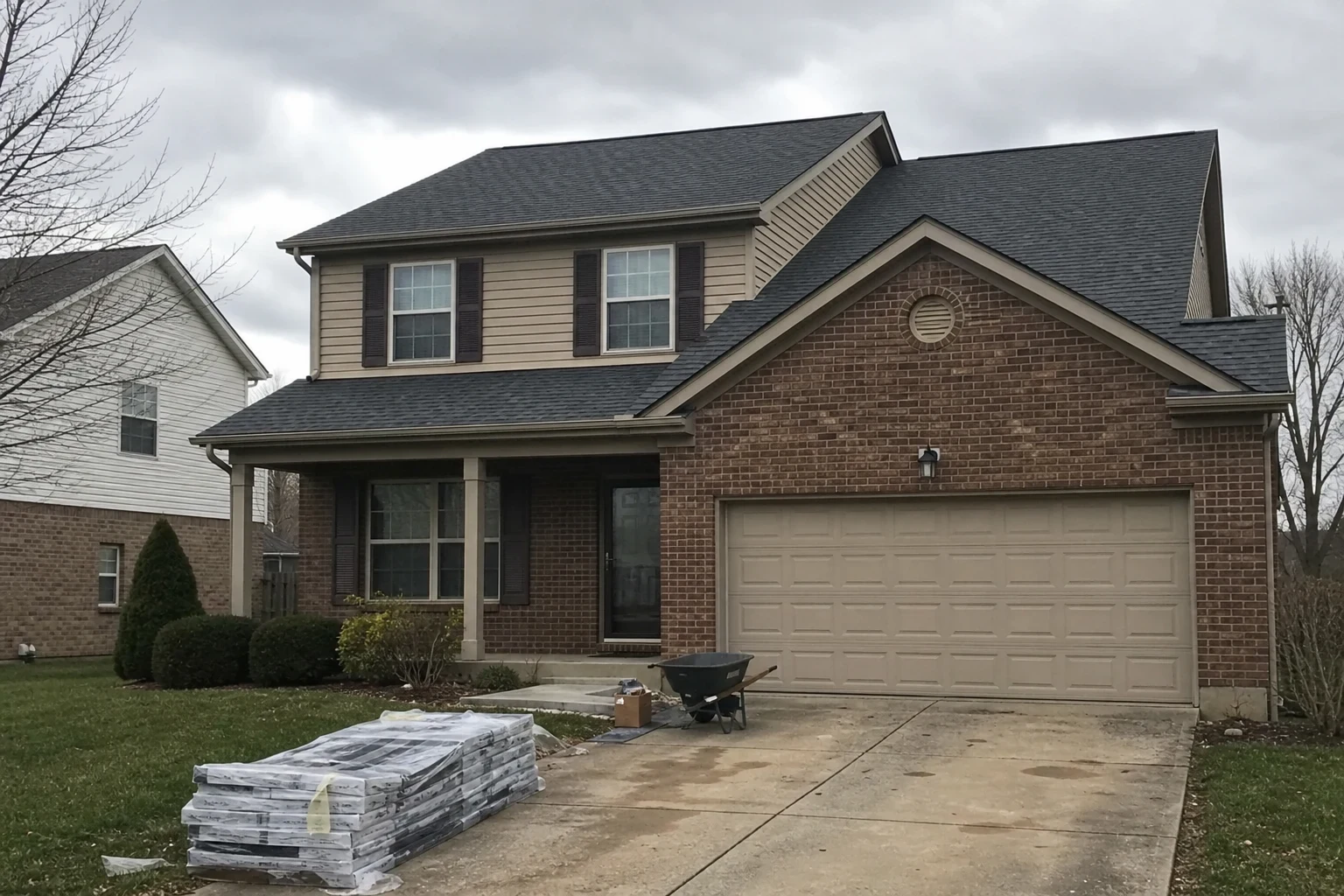
Find Out Where Your Roof Stands
About an hour on your roof and in the attic, then a calm walk through what we saw. You decide what happens next, with no rush.