ServicesRoof Replacement
Roof Replacement in Edgewood, Made Clear Before You Decide
A new roof is a large decision, and you should understand every part of it. We walk you through the shingles, underlayment, flashing and ventilation, show you what we found on your roof, and put the full scope in writing before you commit to anything.
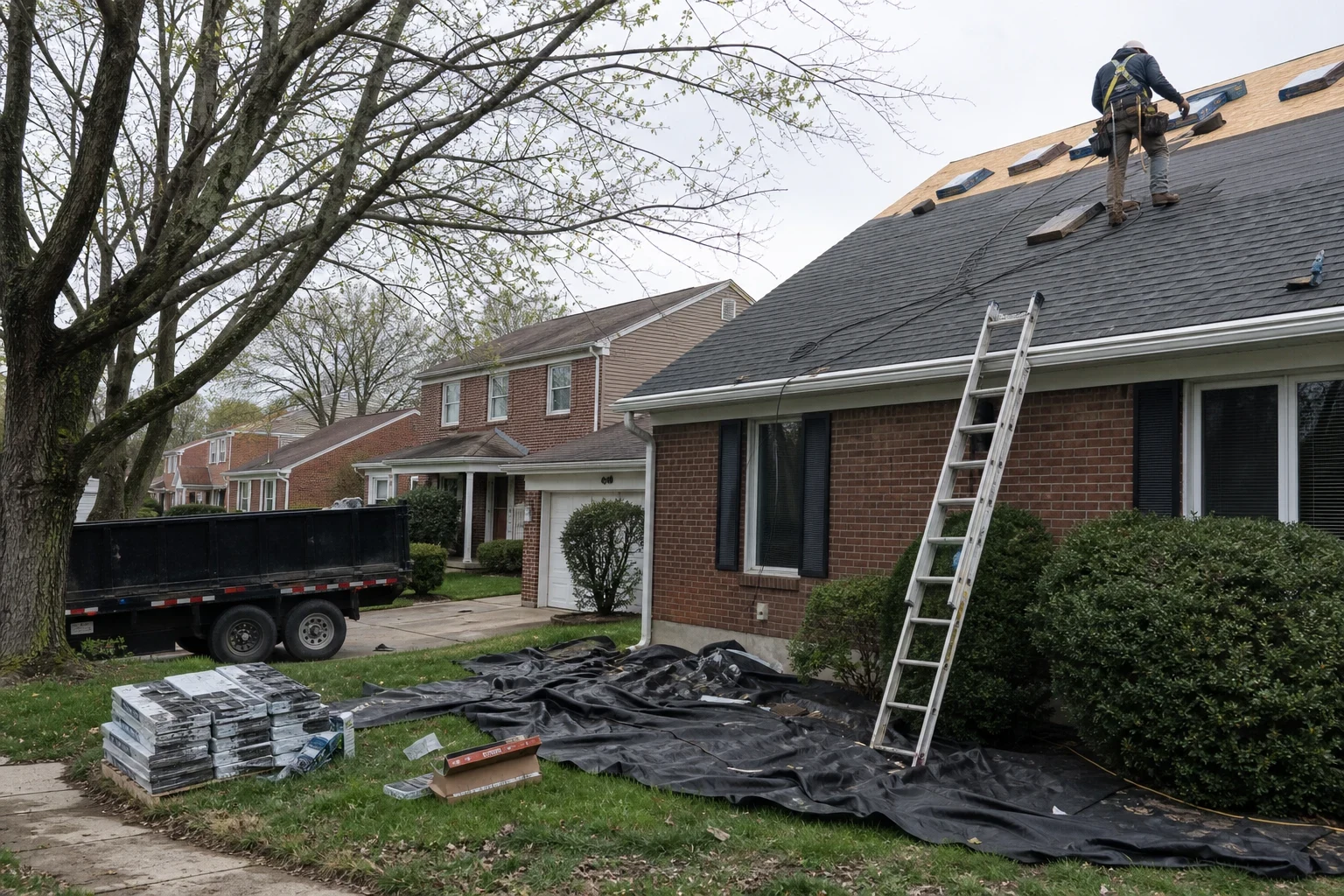
When Replacement Is the Right Call
Most roofs can be repaired for years. Replacement makes sense when the shingles have worn through their protective granules, when leaks keep showing up in new places, or when the wood decking underneath has started to soften. At that point each repair buys less time, and the money is better spent on a roof built properly from the bottom layer up.
If your roof still has life in it, we will tell you, and roof repair may be all you need. If it does not, we show you why in plain terms, with photos, so the decision is yours and you know what you are paying for.
Our winters bring repeated freezing and thawing, which works water into any weak seam. A new roof done right closes those seams, and that is where much of our care goes.
What Goes Into Your New Roof
Stripped to bare wood
Every old shingle and the worn felt beneath it comes off until the decking is exposed. A layover can hide rot and shortens the life of the new roof, so we begin on clean wood.
Soft boards found and swapped
With the old roof off, we step across every sheet of decking and cut out any that flex underfoot or show rot. Photos of each replaced section come to you before new layers go over it.
Ice and water barrier
A self-sealing membrane goes along the eaves, in valleys and around penetrations. It seals around each nail and stops water that backs up under shingles when ice builds at the gutter edge.
Underlayment and new flashing
Synthetic underlayment covers the rest of the deck. We replace drip edge and the metal flashing at chimneys, walls and vents rather than reusing tired pieces.
Shingles and ridge ventilation
We install your chosen shingle to the manufacturer's nailing pattern and balance intake and exhaust vents. Good airflow keeps the attic drier in winter and cooler in summer, which helps the shingles last.
Cleanup and final walk-through
Debris goes into a dumpster, not your flower beds, and we run a magnet over the lawn and driveway for nails. Then we walk the finished roof with you.
Signs Your Roof May Need Replacing
Granules in the gutters
Those sandy bits shield the shingle from sun. When they collect in gutters or at downspouts, the asphalt underneath is exposed and aging fast.
Curling or cupped shingles
Edges that lift or a middle that dips tell you the asphalt has lost its oils. These shingles catch the wind and no longer shed rain the way they should.
Leaks in more than one place
One leak usually points to one problem. Several, especially after earlier repairs, suggest the whole roof is near the end of its life.
A roof around 20 years old
Many standard asphalt roofs reach their limit somewhere past the two-decade mark. Age alone is not a verdict, but it is a good reason for a roof inspection.
Soft spots or daylight in the attic
Sagging between rafters, stained sheathing or light coming through boards means moisture has reached the structure. That is past what a patch can fix.
How Your Replacement Unfolds
- 1
Free estimate on the roof
We climb up, check the attic if you allow it, and take photos. Afterward the scope goes on paper piece by piece, with a short note beside each item saying what it does for your roof.
- 2
Choosing materials together
We lay out the shingle options side by side, from standard architectural shingles to heavier impact-rated lines, with color samples. We explain what each upgrade actually changes, so you only pay for what matters to you.
- 3
Permit and a date on the calendar
If your town asks for a permit, we file for it, then agree on a start date with you. Before the crew arrives, we cover shrubs, protect the siding and set the dumpster where it will not block your drive.
- 4
Tear-off and installation
Most homes are stripped, decked and shingled in one or two days. We only open as much roof as we can close before the end of the day.
- 5
Cleanup and review
We sweep for nails, haul away debris and walk the finished work with you, pointing out the flashing and vents we replaced.
What Shapes the Price of a New Roof
Every roof carries its own price, because size, pitch and what sits under the shingles all differ. We would sooner walk you through those reasons now than hand you a figure that shifts later. Your estimate splits the job into its parts, and these are the ones that move it most.
- Size and steepness
- We measure your roof in squares, each one 100 square feet of surface. A steep pitch slows the crew and calls for more safety gear, which adds labor.
- Layers to remove
- A second layer of old shingles adds labor and disposal weight. We will tell you during the estimate how many layers you have.
- Condition of the decking
- Rotted boards are not visible until tear-off. We note the price per sheet up front so any replacement is expected, not a surprise.
- Shingle and detail choices
- Heavier or impact-rated shingles cost more than standard lines. Chimneys, skylights and valleys add flashing work.
Roof Replacement Questions
Something not covered here? (859) 295-3604
Can you just put new shingles over my old ones?
It is sometimes allowed, but we do not recommend it. A layover hides soft decking, traps heat and adds weight. A full tear-off lets us see and fix what is underneath, and the new roof lies flat and lasts longer.
How long will the work take?
Most replacements finish in one or two days once we start. Larger or steeper roofs, or extensive decking repair, can add a day. Rain delays are possible, and we will tell you as soon as the forecast changes the plan.
Do I need to be home during the job?
Not the whole time. We like to talk with you at the start and walk the finished roof with you at the end. Expect noise, and it helps to take fragile items off walls next to the roof line, since hammering can shake them.
Will insurance pay for my new roof?
Most homeowner policies pay for harm from a specific event, like a hailstorm or a strong wind, rather than a roof that has simply aged out. If you think a storm caused your damage, our storm damage repair page explains more. We can photograph what we find and walk you through the steps, while your adjuster decides what the policy covers.
Which shingle should I choose?
For most homes, a good architectural shingle is the sensible middle ground in look and lifespan. Impact-rated shingles cost more and may lower some insurance premiums, which is worth asking your agent about. We lay out the tradeoffs and let you decide.
Should I replace my gutters at the same time?
If your gutters sag, drip at the seams or have pulled loose from the fascia, replacing them alongside the roof means one setup instead of two. It also lets us fit the new drip edge and gutters to each other. If they are sound, we leave them in place, and our gutters page covers the details.
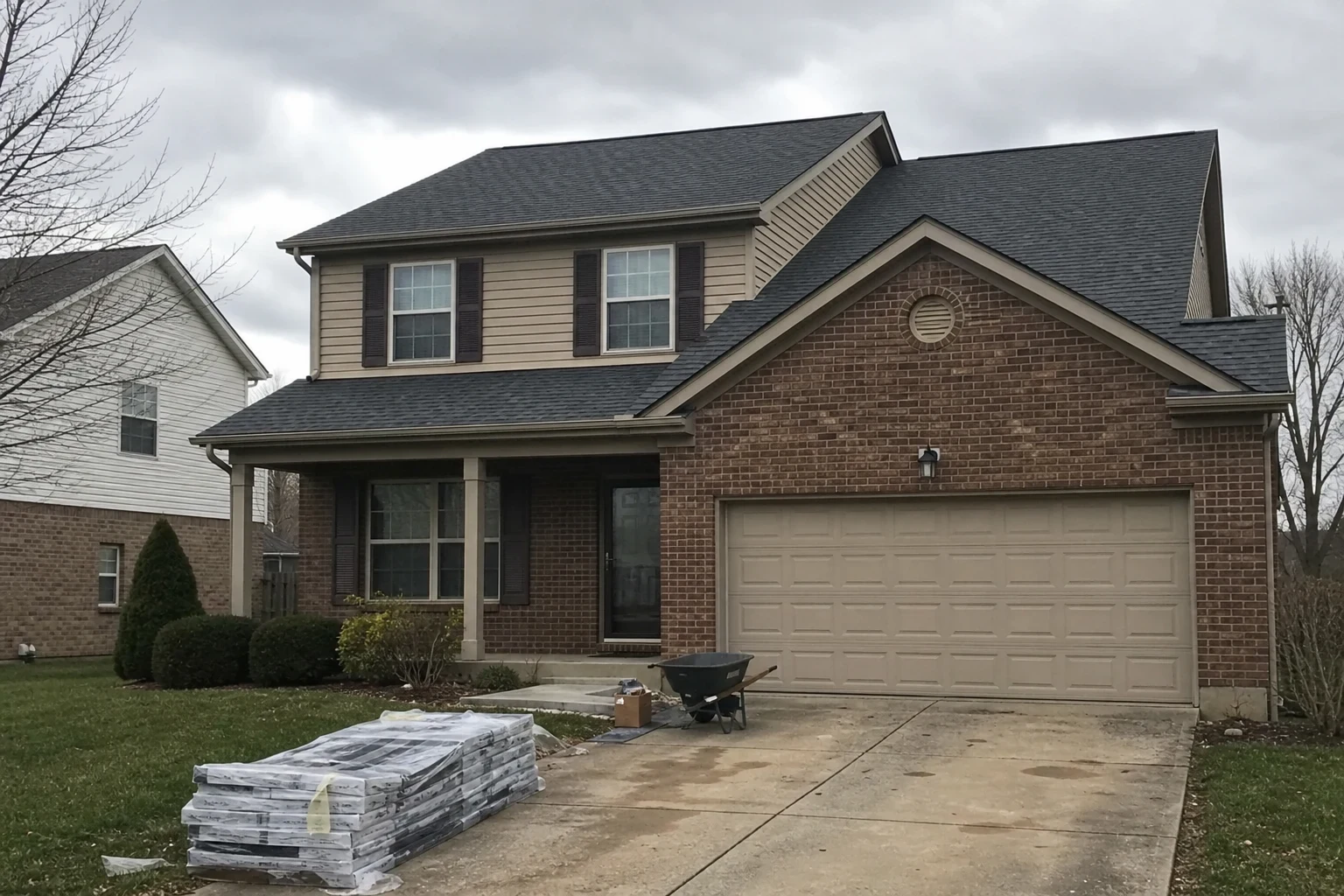
See Your Roof the Way We Do
We climb up, photograph what we find and go over what a new roof would involve, one part at a time. If a repair will carry you a few more years, you will hear that from us too.