ServicesStorm Damage Repair
Storm Damage Repair in Edgewood, With Each Finding Explained
Storm damage is not always obvious from the driveway. We look over your roof, gutters and siding after hail or high wind, show you photos of what changed and tell you plainly what it means for your home before any work begins.
What Storm Damage Repair Covers
Storm damage repair means putting back what wind, hail or falling limbs took from your roof and the exterior around it. That can be a handful of lifted shingles on one slope, bruised shingles across the whole roof, a dented gutter run or a split piece of siding. Each calls for a different fix, and some damage only shows up as a leak months later.
Our job is to sort the real damage from ordinary wear and explain the difference. Hail leaves soft, dark spots where the granules are knocked loose. Wind breaks the seal strip that holds a shingle flat, so it lifts and creases. We point to each one on your roof, in photos, so you can see what we see.
Spring thunderstorms and the occasional winter ice storm bring most of the calls we get. The goal is the same each time: a dry, sound roof and a clear picture of your options.
What the Work Includes
A full exterior check
We walk the roof when it is safe to do so and look at shingles, ridge caps, flashing, vents and pipe boots. We also check gutters, downspouts and siding, since storms rarely hit just one surface.
Labeled damage photos
Each damaged spot is photographed and labeled by slope or wall, so you can find it again on the roof itself. The pictures stay with you and help if you decide to bring your insurer in.
Temporary protection
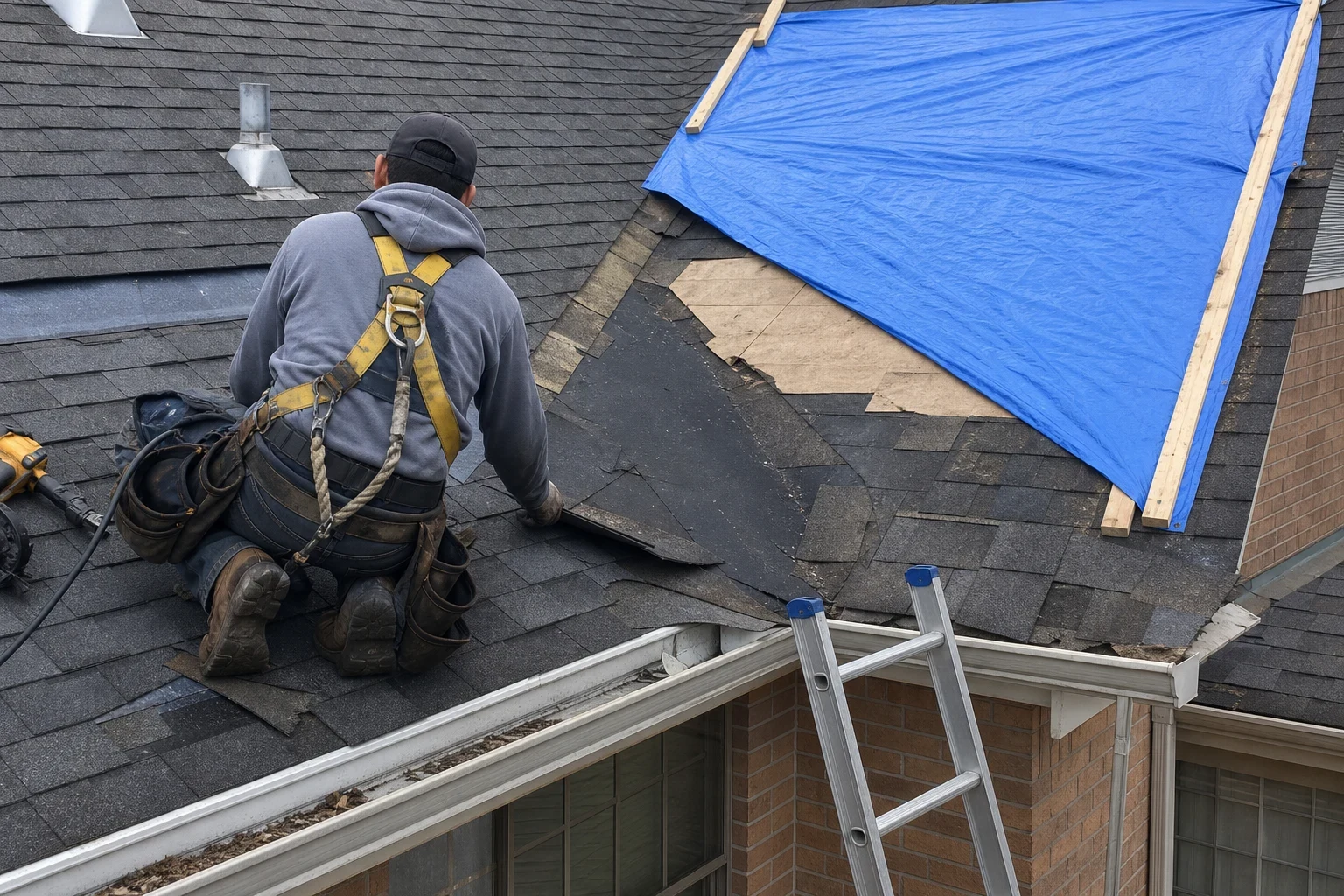
If a section is open to the weather, we secure it with a tarp or temporary patch until the permanent repair is done. That keeps water out of the decking and attic in the meantime.
Shingle and flashing work
Shingles that wind folded back, hail split or the storm carried off entirely come out, and new ones go in, matched to your existing roof as closely as current product lines allow. Flashing at chimneys, walls and valleys that was bent or pried loose gets reset or replaced so water runs off the roof instead of under it.
Gutter and siding repair
Dented or pulled-away gutters are rehung or replaced, and cracked siding panels are swapped out. Our Gutters and Siding pages cover those services in more detail.
Signs Your Home Took Storm Damage
Granules in the downspouts
A heavy pile of sandy grit at the bottom of a downspout after hail often means shingles lost their protective coating. Bare spots age much faster in sun and cold.
Shingles on the lawn
Even one shingle in the yard means a gap on the roof. The shingles around it may also have lost their seal.
Dented metal
Dings in gutters, downspouts, vent caps or a mailbox are a quick clue that hail was large enough to bruise your shingles too.
New stains on a ceiling
A brown ring or soft drywall after a storm points to water getting past the roof. It is worth having it traced before the wood underneath stays wet.
Cracked or loose siding
Wind-driven hail can split vinyl siding, especially on the side that faced the storm. Gaps let water in behind the wall.
Limbs that came down on the roof
Even if the branch rolled off, it can crack shingles or bend decking. We check the impact area from above and from the attic when we can.
How a Storm Repair Unfolds
- 1
A first phone conversation
Let us know what caught your eye, roughly which day the weather hit and whether any water made it inside. From there we settle on a time to visit your home.
- 2
Inspection and photos
We go over the roof and exterior, take pictures and note anything that needs a tarp right away. Then we sit down with you and walk through each finding in everyday words.
- 3
Your options, in writing
You get a written estimate that separates storm damage from normal aging. If the roof is too far gone to patch, we say so and describe what a full roof replacement would involve instead.
- 4
Repair day
We cover plants, windows and the driveway, then strip and replace the damaged materials. At the end of the day a magnetic sweeper goes over the lawn and drive to pick up stray nails, and we show you the finished repair before we pack up.
What Moves the Cost of a Storm Repair
Two storm repairs can look alike from the ground and land far apart on price. The size of the damaged area, the materials involved and the shape of the decking under the old shingles all play a part. We explain each line on your estimate so nothing comes as a surprise.
- How far the damage reaches
- Wind that peeled up a dozen shingles near one ridge makes for a modest repair. When hail has bruised shingles on every face of the roof, patching rarely makes sense, and we will talk with you openly about replacement.
- Matching the existing roof
- Older shingle lines are sometimes discontinued. Finding a close color and profile match can take extra sourcing, and we tell you when a perfect match is not possible.
- Condition of the decking
- If water reached the plywood underneath, soft sections have to be cut out and replaced before new shingles go on.
- Roof pitch and access
- Steep slopes and tight spots near trees or neighboring houses need more safety setup and time.
- Gutters and siding included
- Adding gutter or siding repairs to the same visit changes the scope, though handling it together usually saves a second trip.
Common Questions After a Storm
Something not covered here? (859) 295-3604
Should I file a claim first or get the damage inspected first?
The order is up to you. Plenty of homeowners prefer to learn what was actually harmed before opening a claim. We can inspect, photograph each damaged area and walk you through it, which gives you something specific to share when you speak with your insurance company. What the adjuster finds and what the policy covers are matters between you and your insurer.
Can you tell hail damage from normal wear?
Usually, yes. Hail leaves random, soft impact marks with granules knocked away, while age shows as even granule loss, curling or cracking across the roof. We show you examples of both on your own roof so you can see the difference.
Is it safe to wait a few weeks before repairing?
It depends on what we find. Bruised shingles with no opening can often wait for a scheduled repair. Missing shingles or exposed decking should be covered right away, and we can tarp them until the permanent work is done.
Will a repaired section stand out from the rest of the roof?
New shingles are usually a little brighter at first and tend to blend in as they weather. We look for the closest available match and tell you honestly beforehand if the difference will be noticeable.
Do you check the attic too?
When there is access, yes. Daylight through the boards, damp insulation or water stains on rafters tell us whether the storm let water inside, which helps us scope the repair correctly.
Find Out What the Storm Really Did
We will go over your roof, gutters and siding, share the photos and talk through your options without pressure. If this is your first visit with us, our Limited Time — $50 Off Your First Service Call offer applies.